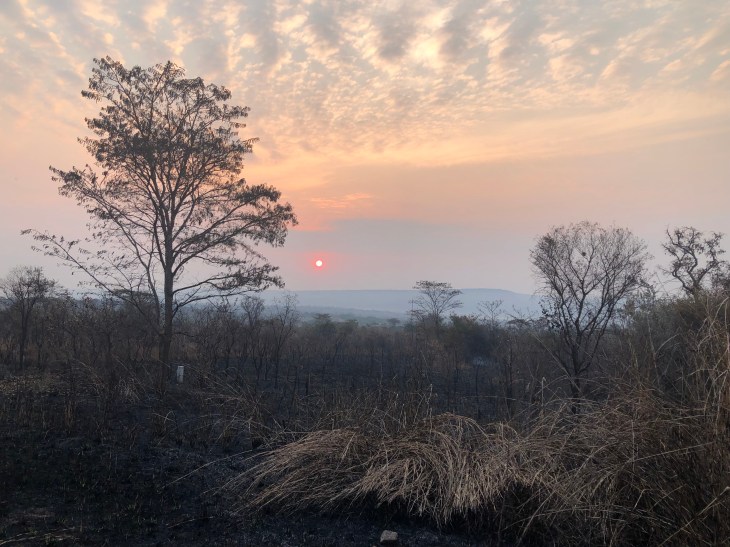
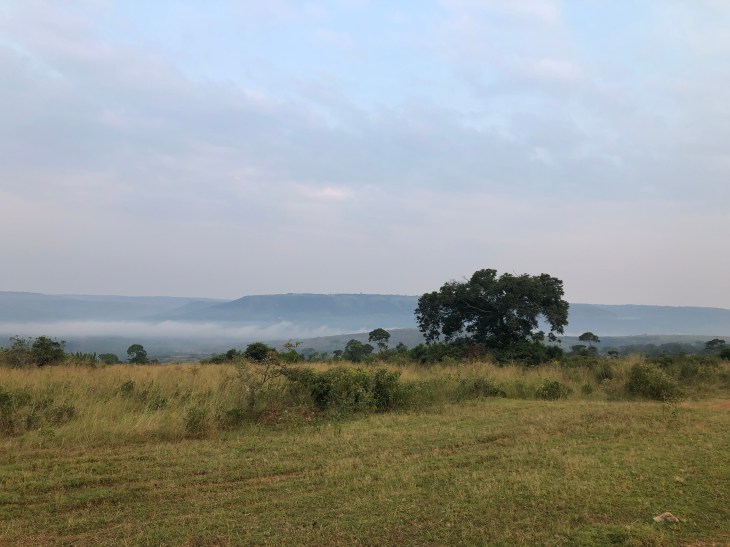
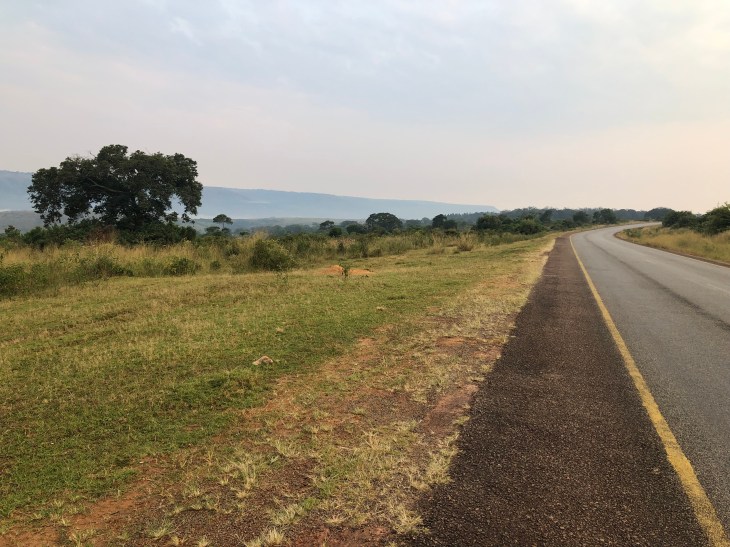
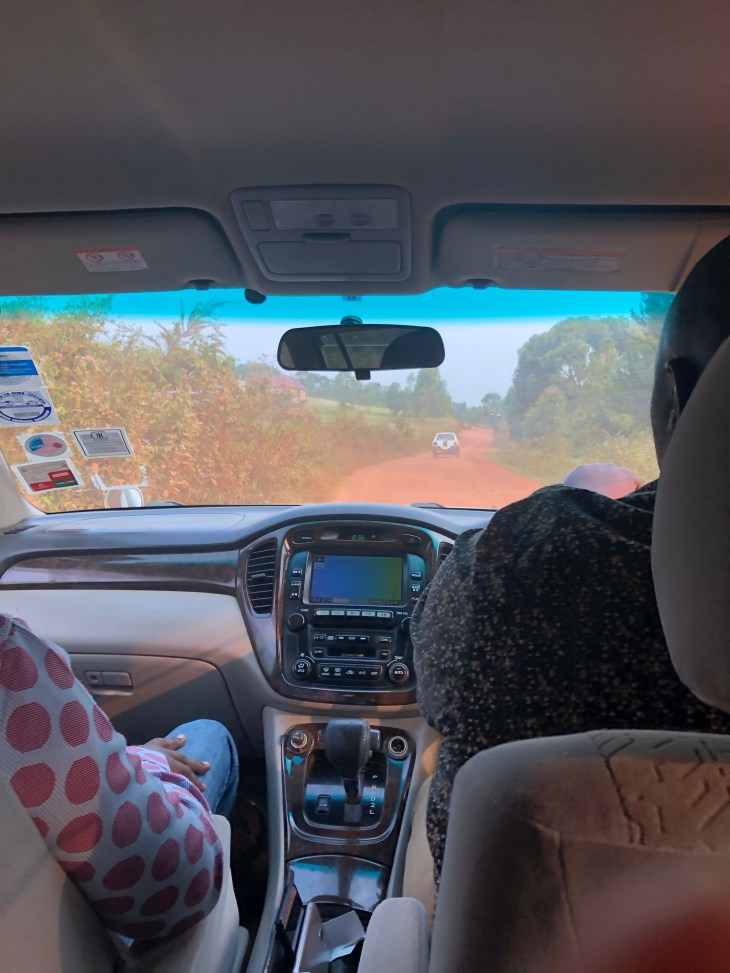
The road to Bukoba started around 5:30am on a hazy Sunday morning. We traveled from a neon pink sunrise to a cool, foggy blue-green landscape up in the hills, our surroundings growing increasingly lush by the hour. Bernard hired a driver so we could nap and relax along the way.
When we reached a gas station to fill up, I saw the name “Mzze Johanssen” pop up on Bernard’s cell phone screen — that’s Jesse’s dad!
A few minutes later we pulled over on the side of the road, right behind a white RAV4. My jaw just about dropped to the floor when I saw the white-haired man who popped out of the car—a shorter, older, but otherwise perfect clone of my colleague (boss’ boss’ boss!), Jesse.
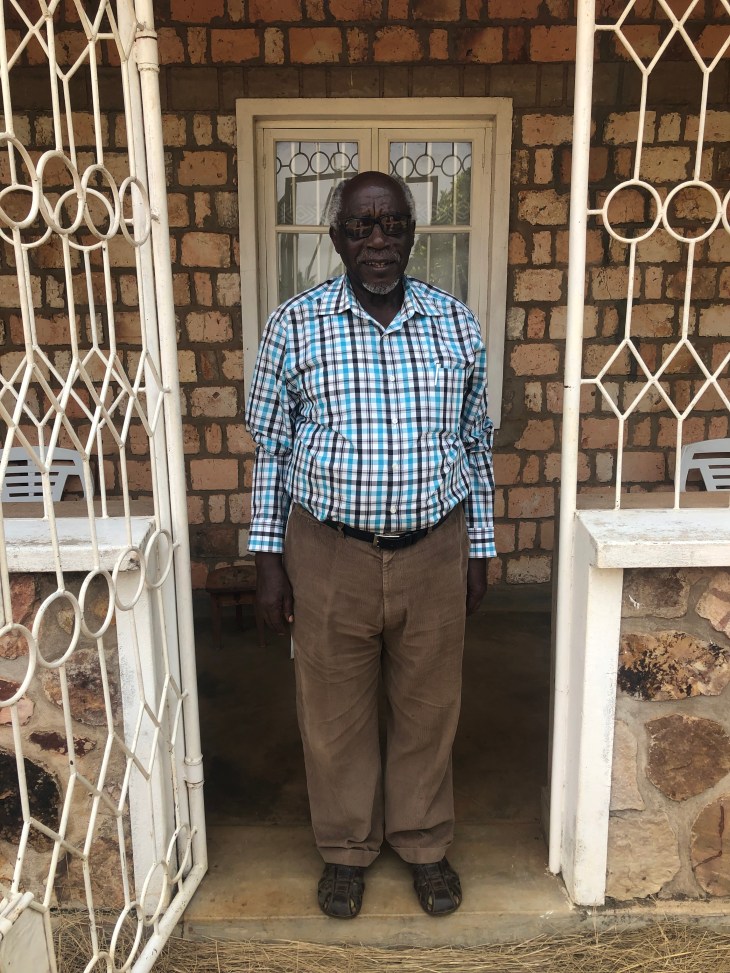
Without even thinking, I shrieked “That’s him!” and jumped out of the car to greet him.
He was already enthusiastically shaking Bernard’s hand and then raising his arms out straight and high above his head in a Superman-like pose amid a rush of Swahili, when I got to interrupt to shake his hand and have a welcome hug, too! He hurried us back into our car so we could follow him down a curvy red dirt road to his house, and in true (to his son’s reputation) fashion, sped off so quickly around the bumpy road we could hardly keep up. I asked Bernard what Johanssen had said when he was raising his arms (I suspected maybe he was exclaiming over how tall I was!) when Bernard told me in fact he was exclaiming over the fact that “we flew here!” —making such good time over a long distance, arriving earlier than he expected us. Such an animated first encounter was the perfect introduction to this dear, punchy 85-year old who would be my guide for the next 3 days.
Upon arrival at Jesse’s childhood home, Johanssen showered us with “Karibu, Karibu!” (Welcome, welcome!), ushering all 3 of us (Bernard, our driver, and myself) into his living room and repeating his hospitable mantra no less than 30 times.
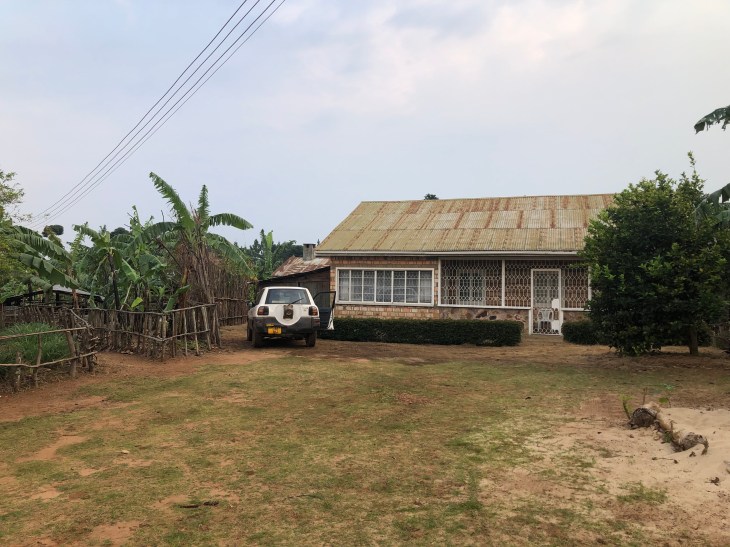
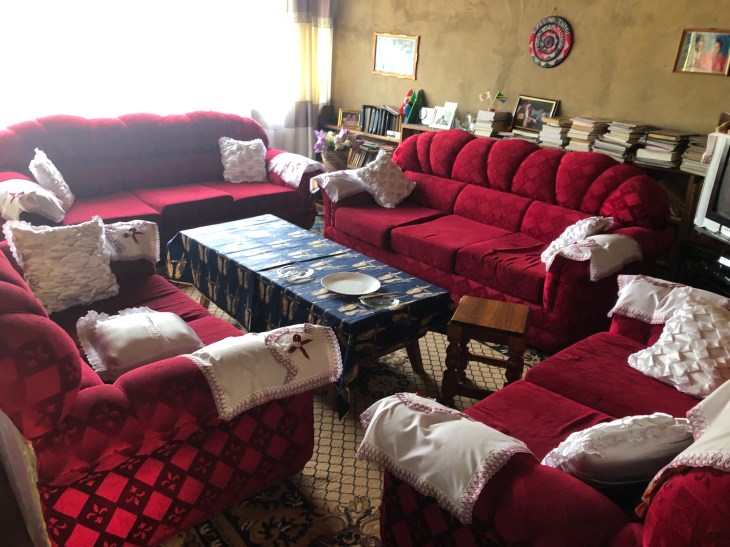
We sat down on the couches, and he served us a lovely breakfast of hot tea and homemade rolls, the tea cups and saucers already laid out neatly on a tray in anticipation of our arrival.
We chatted and got acquainted for a good while, when Bernard made mention of their need to begin their 4-hour journey back to Geita in order to prepare for work the next day. Johanssen quickly objected, explaining his family was preparing a full meal and they had to stay.
Having just had a full meal and with a long drive ahead, Bernard tried to reason with him. Johanssen switched to Swahili and in a few dramatic motions, he slapped his belly with both hands and then pounded clenched fists into the couch on either side of him with the same feisty insistance of a child refusing to go to bed. No translation needed — he insisted they stay to eat and that was final. This was the fierce hospitality I’ve been told about in Tanzania… if you visit someone’s house, they have to feed you and feed you well!
So half an hour later, we ate again, and then Bernard and our driver were at last permitted to leave. So began my visit with a family whom I’d never met, but who treated me like royalty because of my connection to their son.
We started with walking tours.
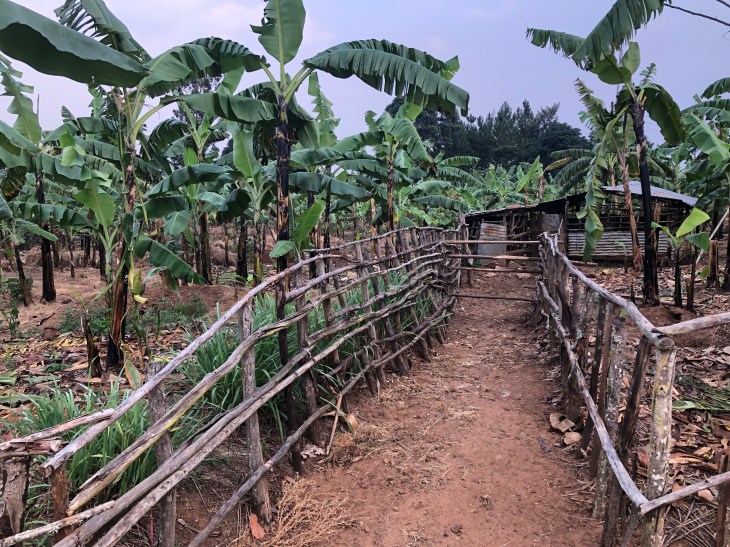
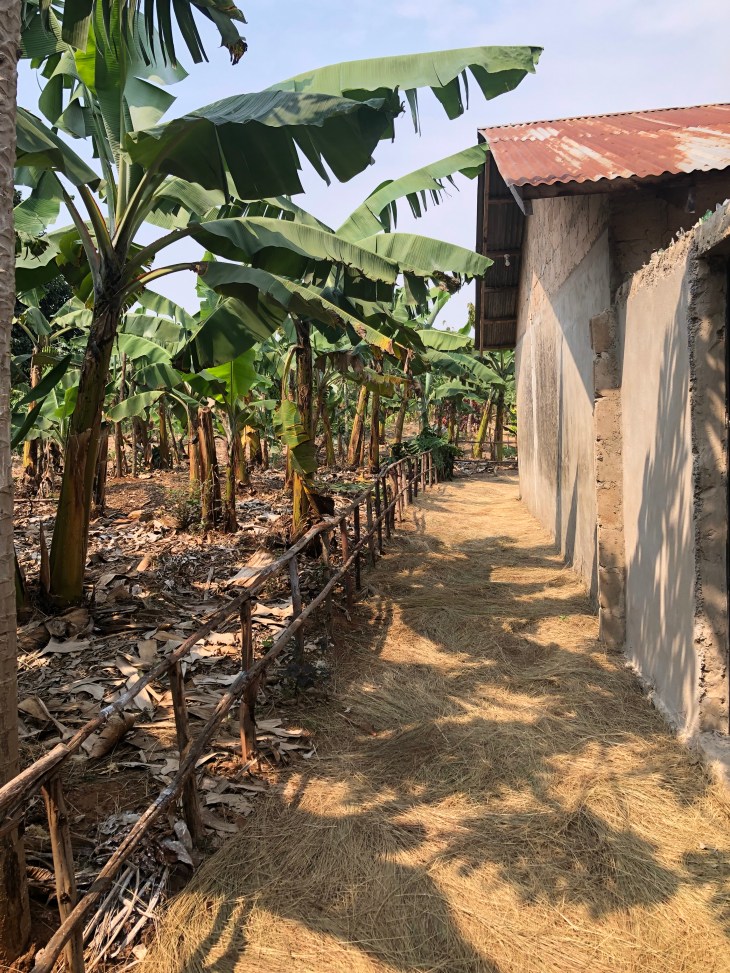
Johanssen walked me around his property, pointing out their farm of banana trees, coffee plants, volunteer mango tree, and the rows of pines he and his wife planted that overlook the valley. I commented, “This place is so peaceful!” To which he quickly retorted, “I know! That’s why I live here!” ☺️ They live “in the village” just a 15 minute drive from downtown Bukoba… it somehow reminds me of Boone, just a little.
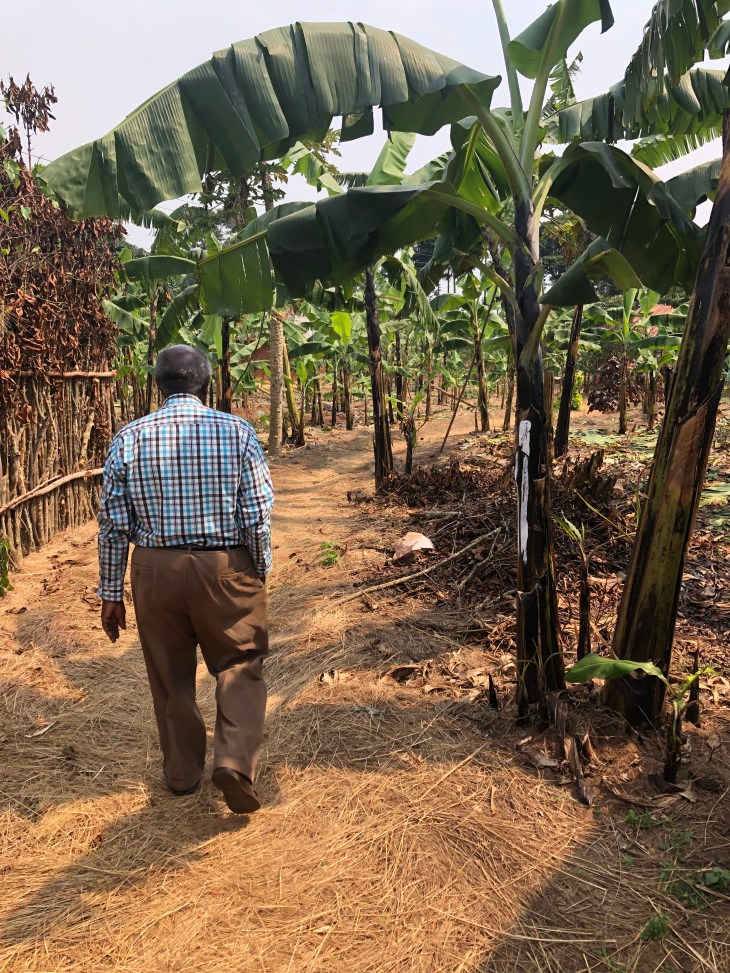
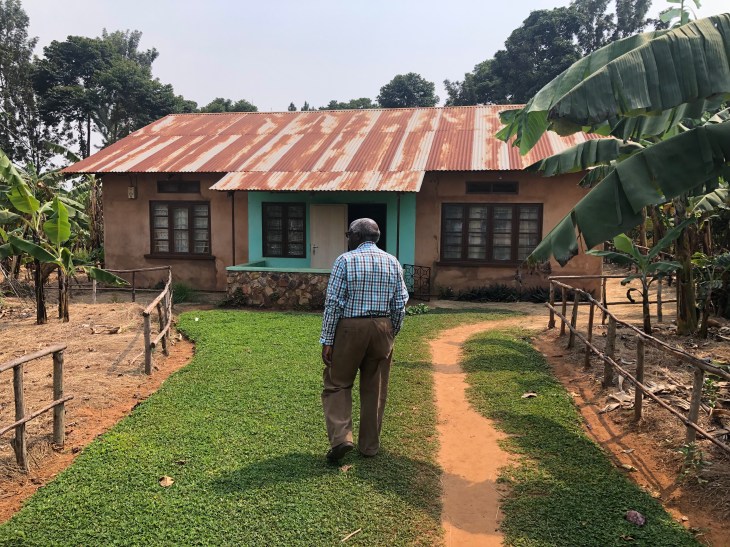
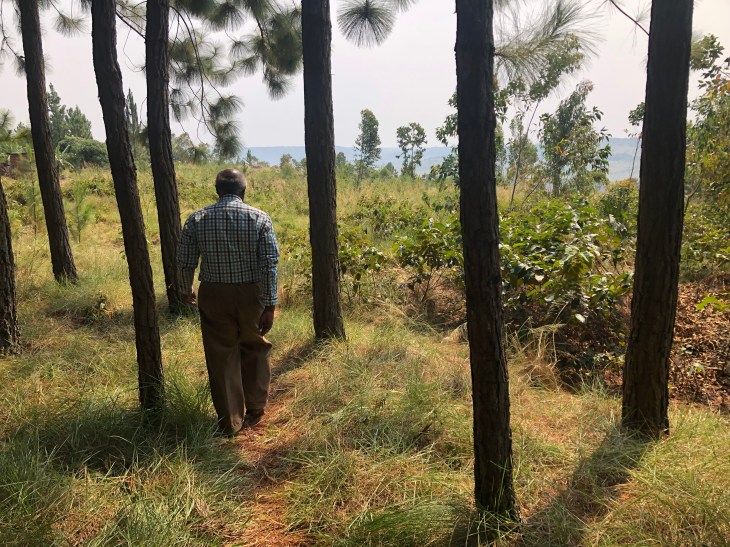
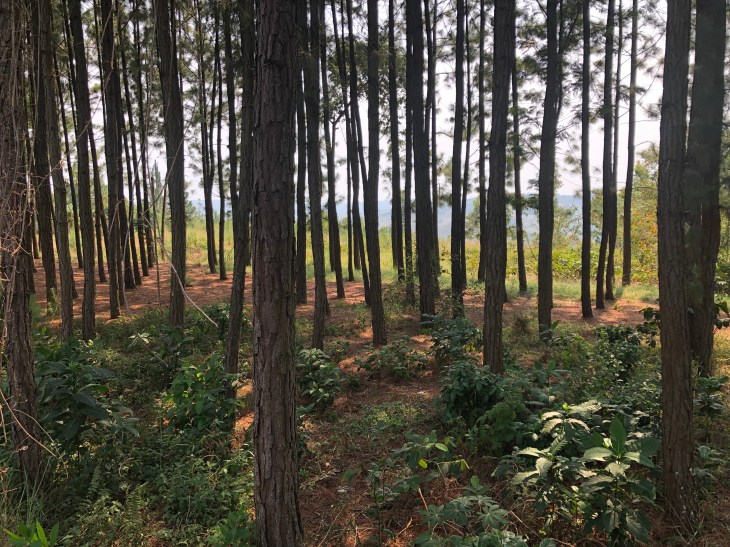
He then assigned his granddaughter Lana to show me around their neighborhood, so we strolled downhill along a red dirt road, right as church was letting out. A flood of people in their Sunday best greeted us, some with kind welcomes and others feigning (I hope!) sharp scoldings for not greeting my neighbors earlier! As we turned back up the hill homeward, I heard a scream of “Nzungu!!” (White person!!) from a group of small kids in hijabs behind us. They all came running towards us and then stopped abruptly ten feet away, staring, giggling, and hiding behind each other.
I guess not many white folks make it up here. In fact, in the 6 days between leaving the airport in Mwanza and flying back to Dar from Bukoba, I only saw two other white people. I’m going to miss being such a novelty when I come home!
I digress.
The rest of the afternoon, I spent driving around Bukoba visiting Johanssen’s 91-year old brother, and his wife, along with his two younger sisters, and a number of other friends who happened to live nearby.
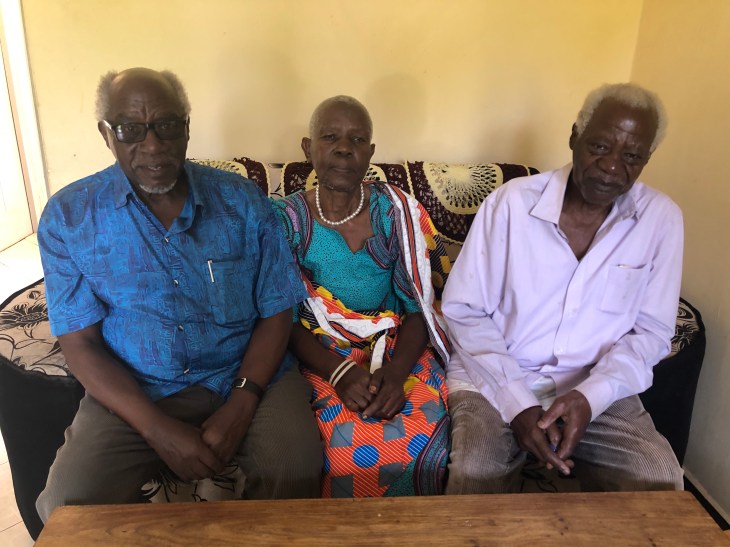
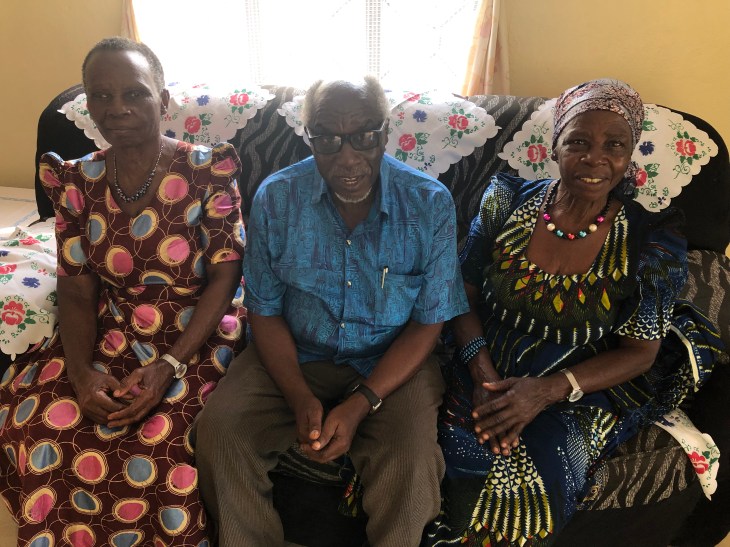
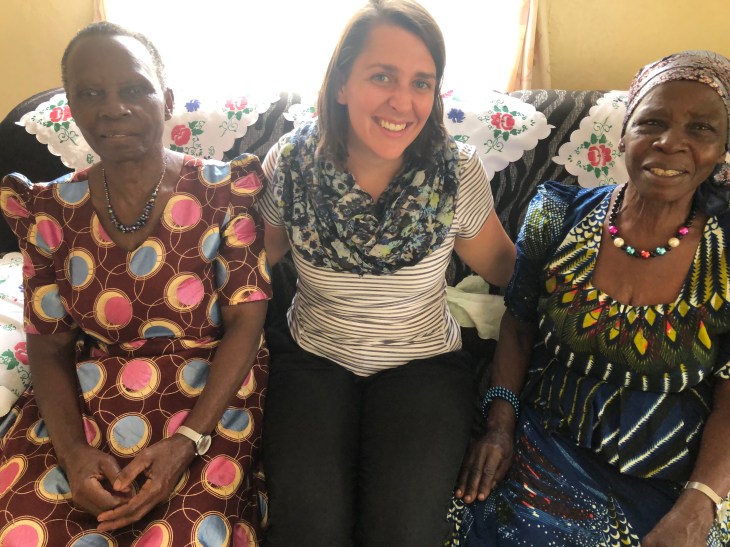
Dropping in to see friends feels like a lost art at home—something that only happens now in college dorms or when I’m visiting my grandma around the holidays. It’s something I wish we did more of; it was a sweet way to spend the afternoon.
We also stopped by to share condolences at a gathering for someone who had died and been buried the day before. When we pulled in, we saw a big tent with several dozen people seemingly just sitting around, visiting. I asked Johanssen for some additional context, and he explained its tradition for friends to come and sit and take care of the family with food and emotional support for 4 days following the death.
What a beautiful thing to have clear guidance and an act of solidarity from your community. I loved that.
Along our visits, I also noticed a number of graves in people’s yards or gardens—apparently it’s common to bury your family members on your land, almost next to your house. I would love to find out more about this and explore the reasoning/belief behind it. In some regards, it might be nice to have that continual feeling of physical closeness to your loved one; on another hand, I could also see it being difficult during the grieving process if that’s the first thing you see every time you walk out your front door.
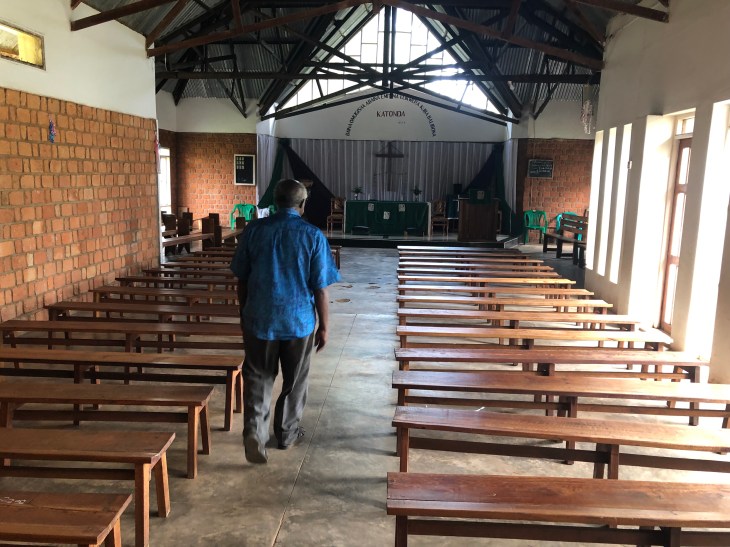
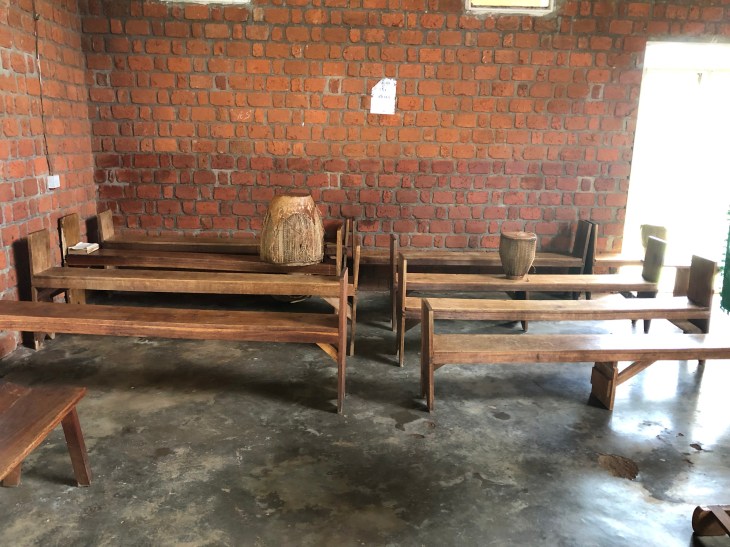
Speaking of the afterlife…. (!) we also got the minister’s blessing (along with his keys) to sneak into the Lutheran church and take a quick tour! I trailed behind Johanssen as he showed me the rows of benches for folks to sit, at last pointing out two sections near the very front of the church: one to the left complete with drums—seating for the choir; another to the right with some backed benches right next to the pulpit—special VIP seating for their seniors who are hard of hearing, seeing, and needing a little extra back support ❤️
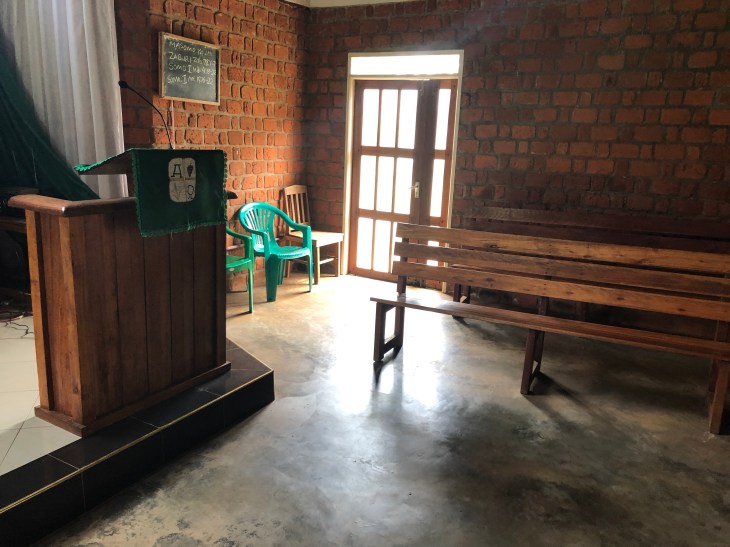
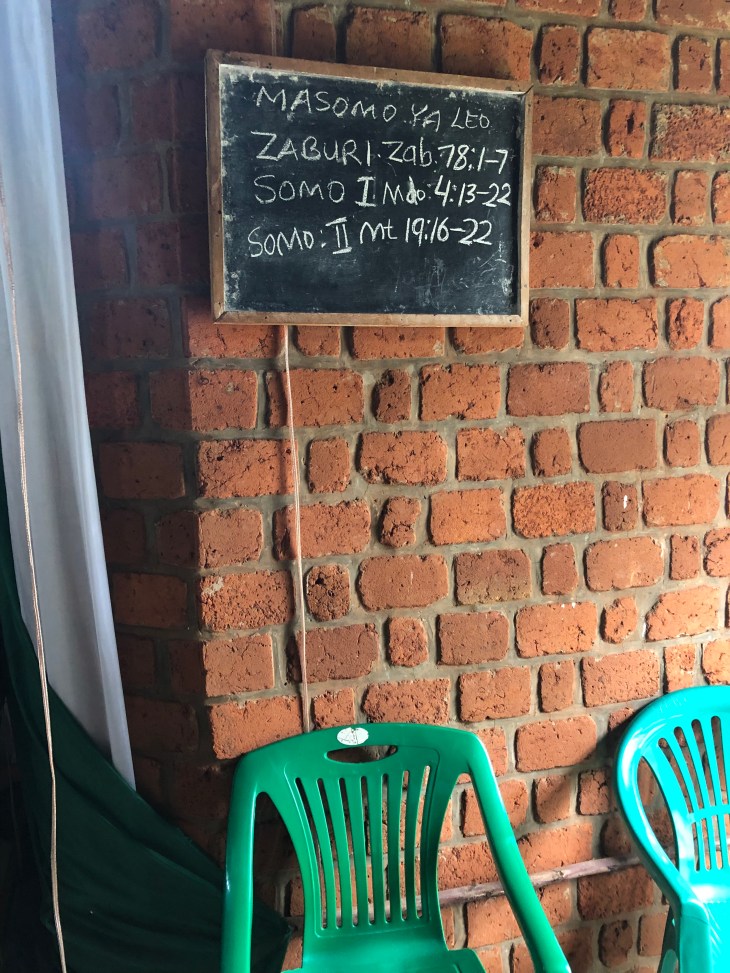
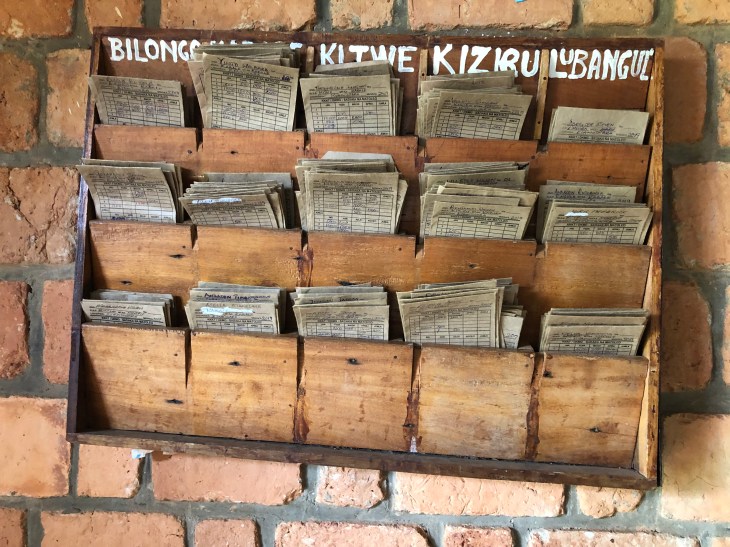
For any scripture enthusiasts (Mama!!) you can check out the day’s readings — Zaburi is Swahili for Psalms, and Somo is lesson. I also noticed the little slots near the door for each village’s weekly pledges. Fun to see their set up and subtle differences!
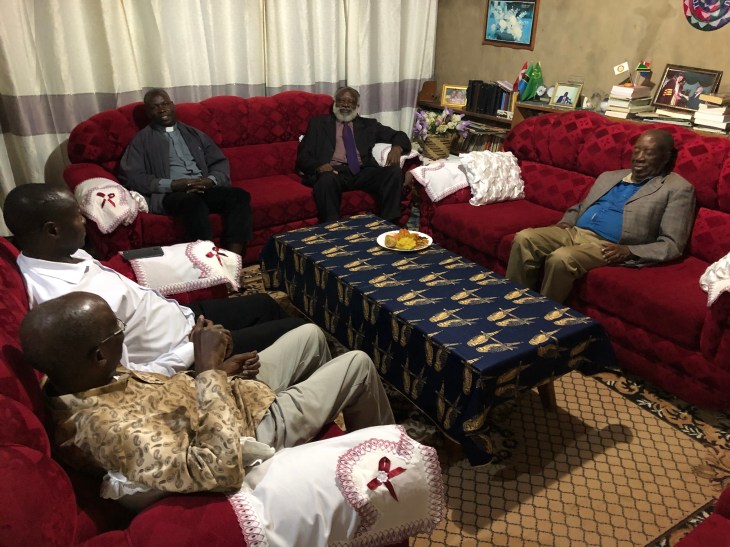
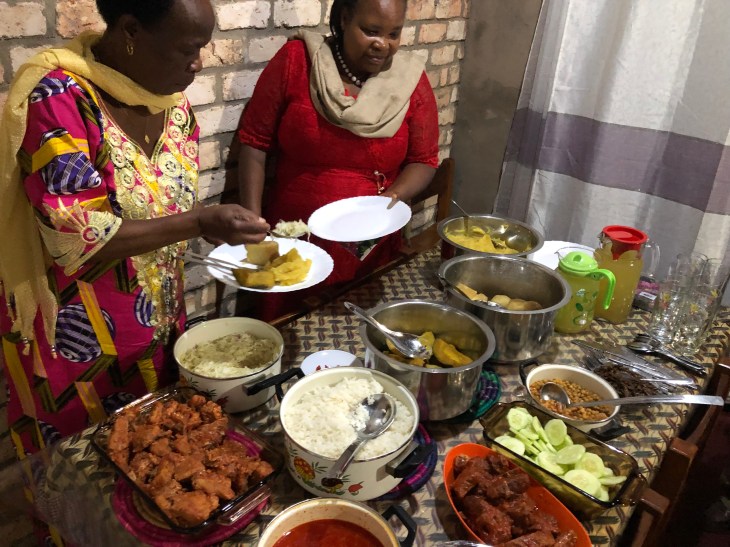
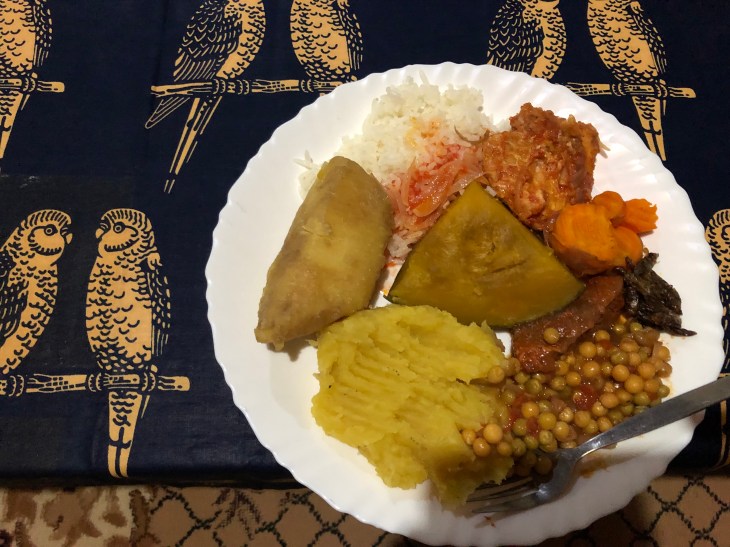
That evening, the family hosted a dinner in my honor, inviting family and also their Lutheran minister. When they all introduced themselves as Jesse’s brother or sister, I tried to get their birth order straight. One of them kindly interrupted me and explained it wasn’t like that—they don’t emphasize the same nuclear family unit that we do in the States—they might be what I would consider cousins or brothers-in-law, but they just all call themselves “brother”. I let go of my need to categorize, and just sat back and enjoyed their company—among family, no further questions asked.
Every one of them had an impressive professional and educational background—teachers, development workers, heavily involved in their community and well-traveled, the lot of them. They engaged me in conversation in English with thoughtfulness and curiosity before eventually switching to Swahili for the later part of the dinner. Knowing very little Swahili, I’ve made a game of trying to guess their conversation topic… sometimes with great success… but for most of the time, it was just sweet to observe their interactions—clearly all very accomplished (almost intimidating!) people, at ease telling stories, enjoying lots of laughs, and sharing a good meal together. It felt like such an honor to be part of this evening.
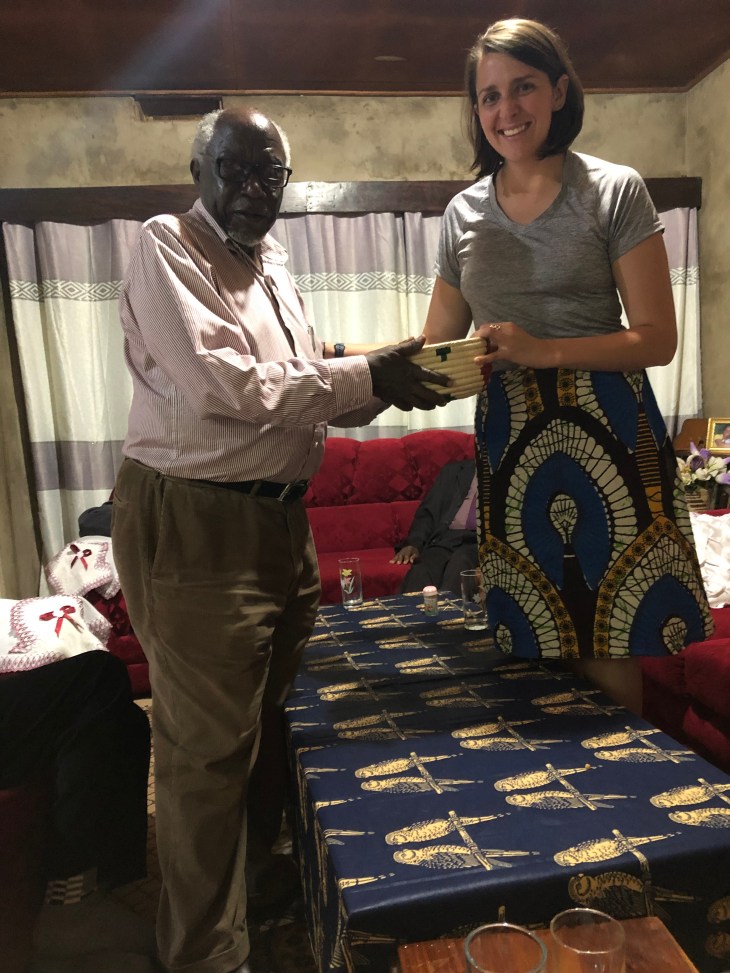
At the end of the meal, Johanssen made an announcement that he was offering me a gift that his wife (currently visiting family in the US!) instructed him to give me—a basket that she had hand-woven herself! He called for a picture of me receiving the gift (which felt a little like when you see the presidents of different countries shaking hands in front of the press!) and everyone applauded, then began to gather their things and head home for the night.
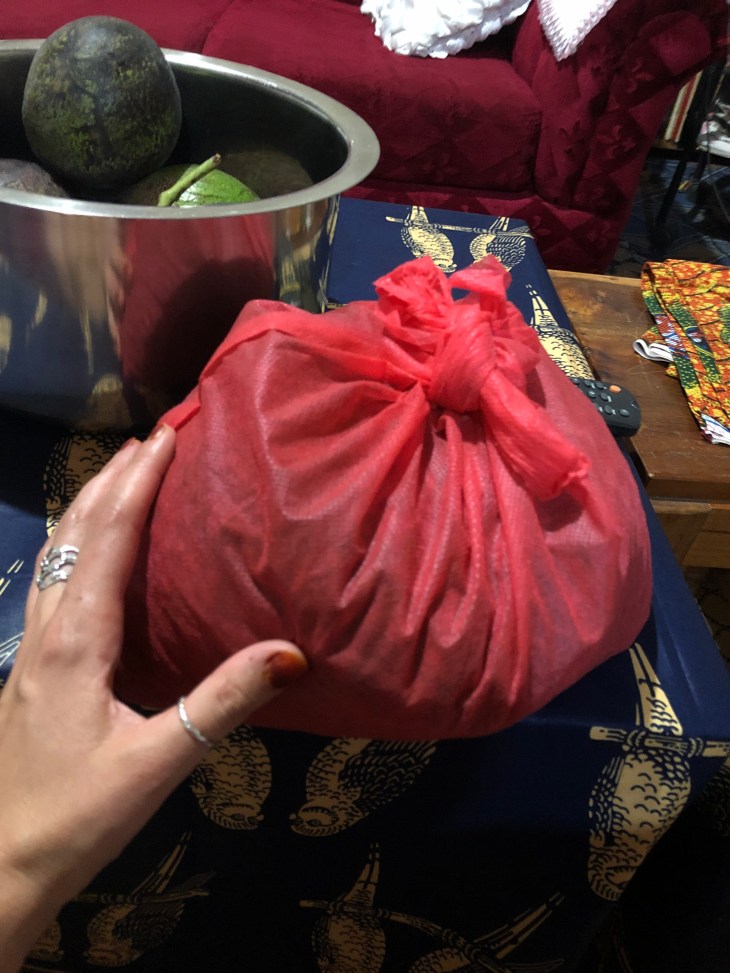
Once the crowd had dissipated, the remaining family members and I were just sinking into the couch in the usual post-company-collapse, when Jesse’s niece came in carrying a giant soup pot, and proceeded to plunk it down on the table in front of me. She lifted the lid to reveal a mass of probably close to 2 gallons of oily, smokey, salty crickets. “These are Jesse’s. Can you take them to him?”
Naturally, I replied with the only appropriate response in this situation:
“Of course! No problem.”
(Post US Arrival Update: I had the biggest moral dilemma whether to check the box that says I am bringing “fruits, vegetables, plants, food, insects” under the declaration form for Customs and Border Protection for fear of having them be confiscated—happy to report I told the truth and we all made it!! Also, Jesse has firmly scolded and corrected me once and for all, “They are not crickets. They are grasshoppers!”
Noted! Full stash pictures below)
—
If my first day in Bukoba was mainly centered around visiting friends and family, my second day placed much more emphasis on visiting the community’s institutions in service to its otherwise “forgotten” populations.
Perhaps purposely, Johanssen gave me very little introduction to each of the places we visited this day; I think he wanted me to experience it with an open mind, and ask all my questions of the people working there, instead of him.
At each of the places we visited, I was overwhelmed by the pomp and circumstance with which we were welcomed… I spent much of the day asking myself why are they being so nice to us?? I later came to realize than Johanssen seems to be chairman of the board of half of these organizations, or somehow was heavily involved in supporting their work through his membership in Rotary Club. Either way, he very graciously presented me as the guest of honor, but I’m fairly certain he was the reason we were being treated so famously.
I’ll share with you 3 of the 5 stops of the day:
1. The Special School
Our first stop, we pulled into a gated courtyard with classroom buildings lining the perimeter. We were seated at a cloth-covered banquet table in front of a row of several benches, which were soon filled in by a group of elementary to middle school-ages students, a mix of students with varying “physical and mental challenges” (as they put it) along with a handful of albino children. All of the teachers were present, as well, seated in chairs opposite their pupils.
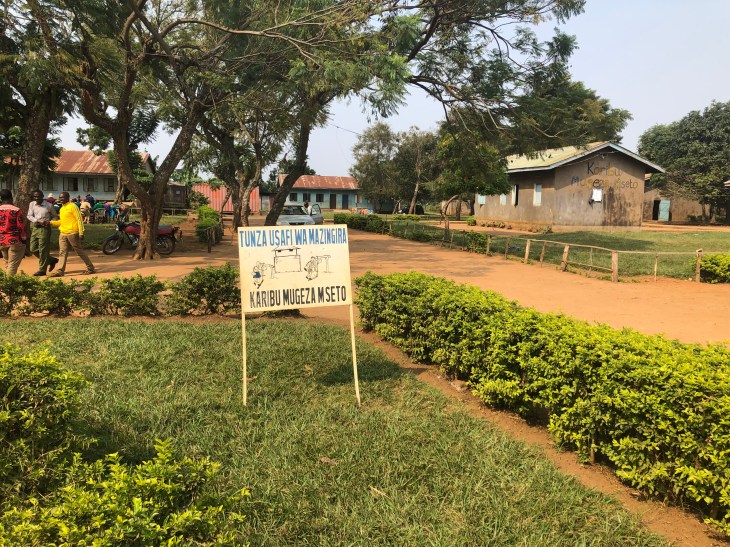
The chairman of the school gave a short welcome speech, and Johanssen ceremoniously introduced me as a colleague of his son Jesse and a representative from Appalachian State University—someone who’s traveled all the way from America to see their school. All of this transpired in Swahili, and one of the teachers stood close by and interpreted the remarks in English for me. The headmaster gave some statistics about the children in the school, and then the small group of students present sang a delightful “Karibu!” Welcome! song with clapping and call-and-response.
Then!
Johanssen handed the floor over to me to say a few words. Sensing this was the end of the program and also being keenly aware of my very limited Swahili, I stood up and gave a quick “Asante sane!” Thank you very much and bow, then promptly took my seat. Johanssen shot me a stern look and said “No no no no!”, motioning me back to standing.
Apparently I was to give remarks(!).
Thoroughly unprepared for this, I stood up and tried to reel in my work self who knows how to deliver speeches off the cuff like this… I managed a few “thank you for the warm welcome and for your important work” (not fully knowing exactly what that was just yet) and “I look forward to learning from you” type comments—the standard good catch-all’s I’ve picked up—thanks, higher ed!
(This ended up being the first of two times throughout the day where I was asked on the spot to deliver a speech (with no prompt), publicly addressing a large group of professionals)
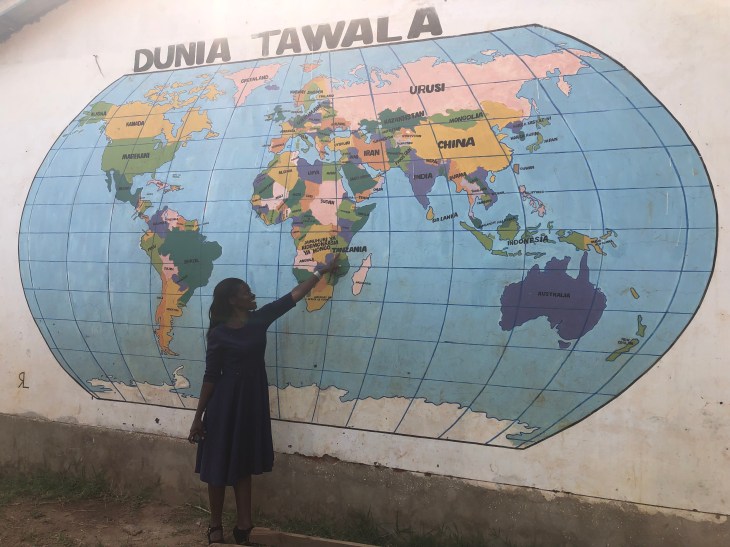
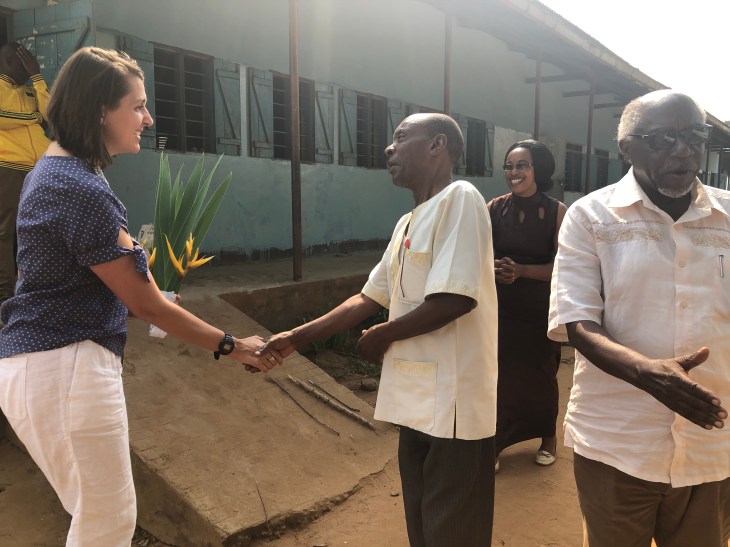
After limping through that speech, the crowd broke up and we began our tour of the facilities. The one English speaking teacher (pictured below) took me by the hand and started walking along the grounds, pointing out buildings and their purposes.
I’d heard some rumblings of reasoning before, but I wanted to get the story straight, so I asked:
“I’m sorry, I don’t understand—why are albino children in a special school with other children with mental and physical disabilities? They have different skin pigmentation, but otherwise they have no cognitive disabilities, right?”
My translator nodded in understanding and explained all of the children are grouped here yes, for special education, but especially for safety. The grounds of the school are lined with high fencing and barbed wiring, and a guarded gate serves as the entrance.
I pressed her, “But why do they need protection?”
“It’s an old traditional belief, particularly among witch doctors, that if you spill the blood of an albino, it will bring you riches and fame. So people will try to hurt them,” she said making a slicing motion across her arm, “and their families don’t want them. They say it’s especially popular with politicians. Sometimes just cut, sometimes kill. I don’t understand this. So they come here, to be cared for by people of compassion… and when they become adults, we hope they are finally strong enough to defend themselves.”
Overwhelming to think of the psychological damage that would do to anyone, much less a child–living with the real fear that anyone, at any time, might be motivated to hurt you. Thank goodness for this school, but… just… wow.
We continued on the tour and saw a whole host of new buildings built in partnership with UNICEF and a nonprofit from Denmark. Dormitories, a medical facility… all beautiful new construction and completely unused.
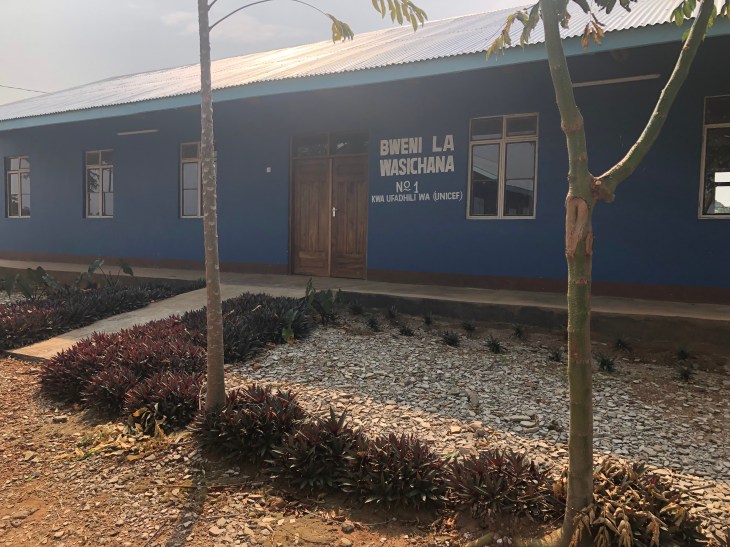
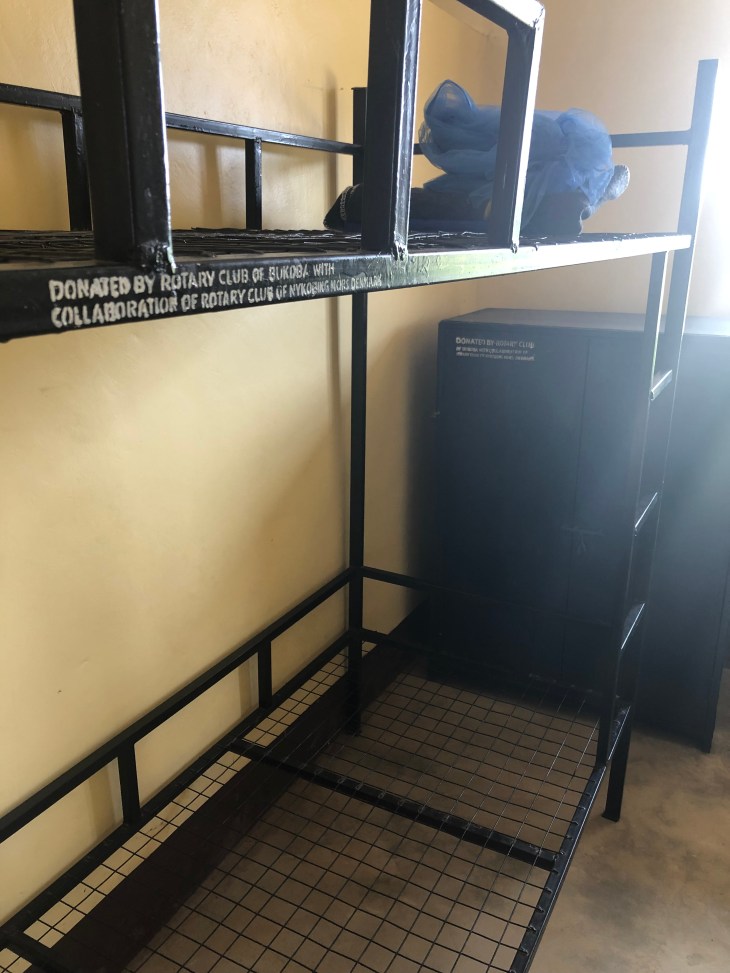
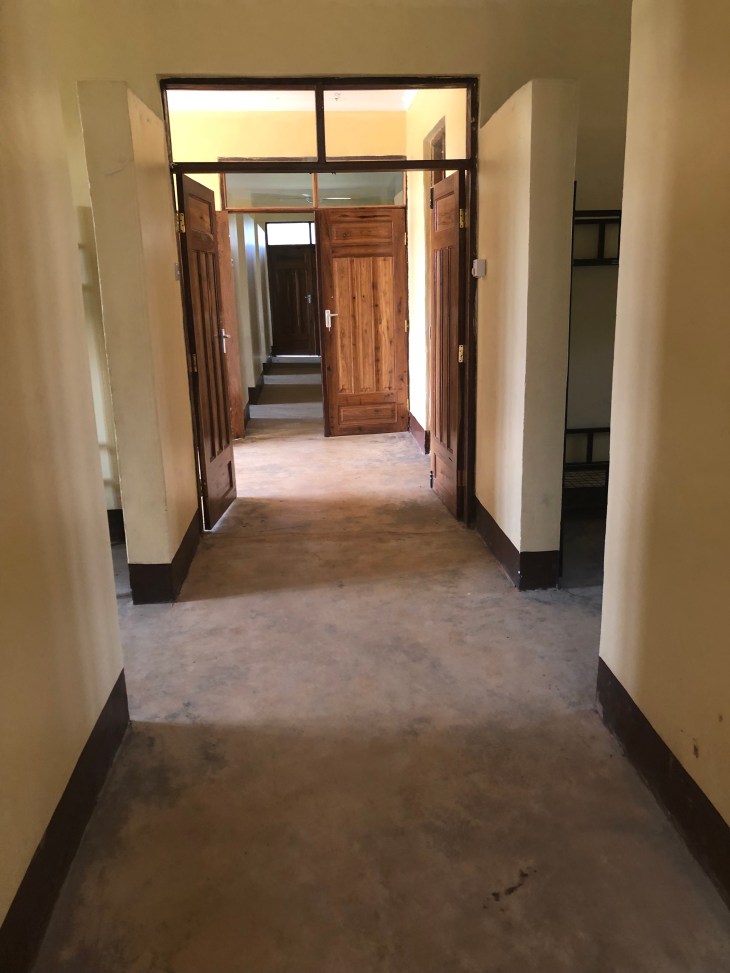
While they secured funding for these buildings, they have not been able to find donors who will pay for the construction of a protective wall—without which the buildings are rendered temporarily useless. It’s too dangerous for the children to sleep out in the open, without protection.
Johanssen just shook his head… such a failure in planning and lack of understanding of the challenges and realities on the ground. Well-meaning foreign aid, pay heed!
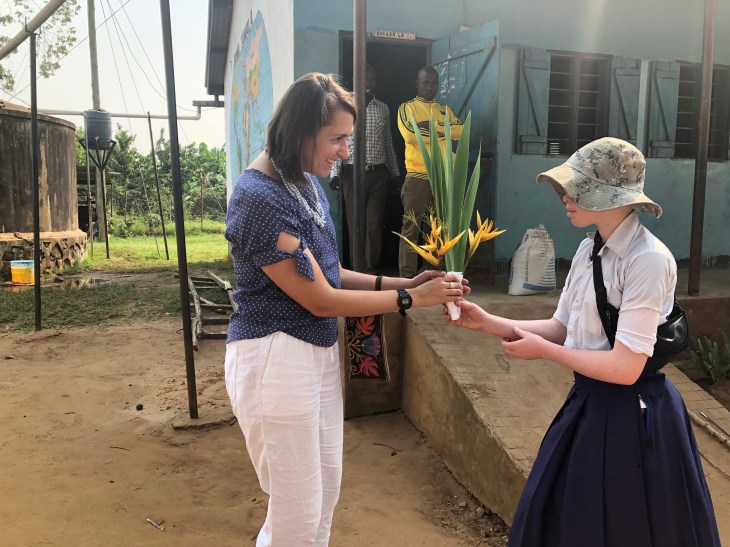
As we wrapped up the visit, the administrators said that the children had a farewell gift for me—they presented me with a sort of tropical bouquet and all lined up to shake my hand, placing one hand on their hand-shaking arm and doing a slight curtsy as a sign of respect. It was a very humbling line up.
And that was just our first stop of the day. First of five(!).
….
2. The School for Deaf and Deaf/Blind
A few hundred meters down the road from our first stop, we pulled into a school for children who are deaf or deaf and blind. Since our visit happened to align with students’ vacation, we met with the headmaster who gave us an overview of the school, followed by a campus tour of mostly empty classrooms and dormitories.
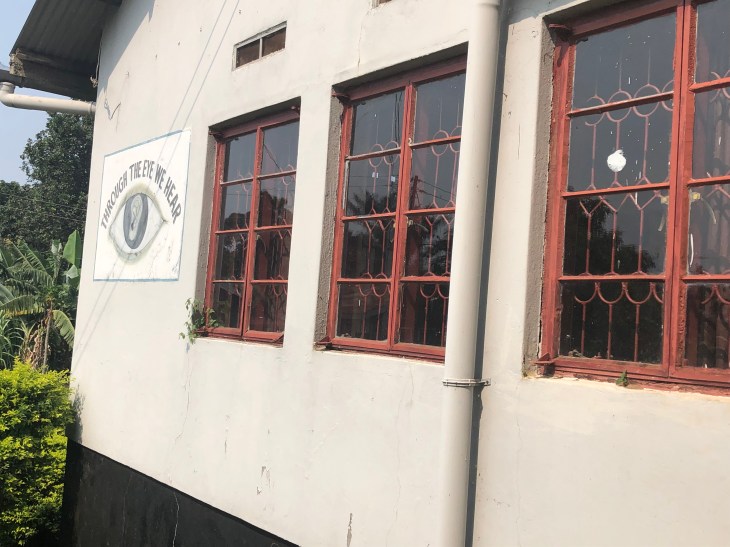
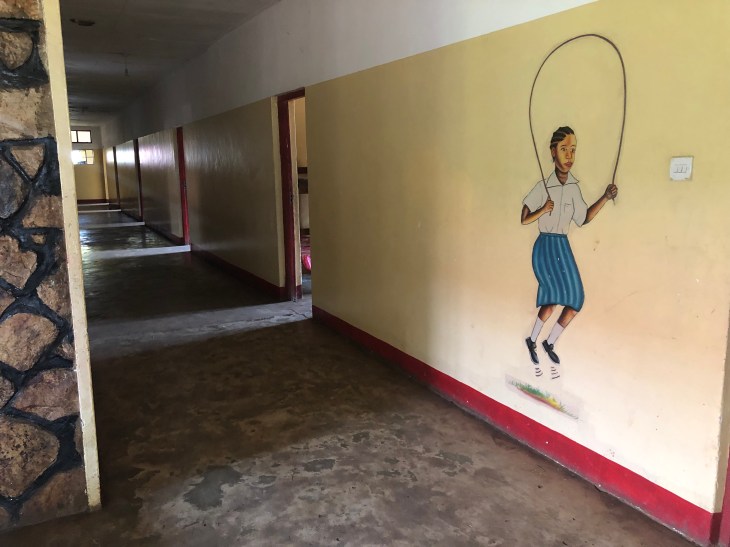
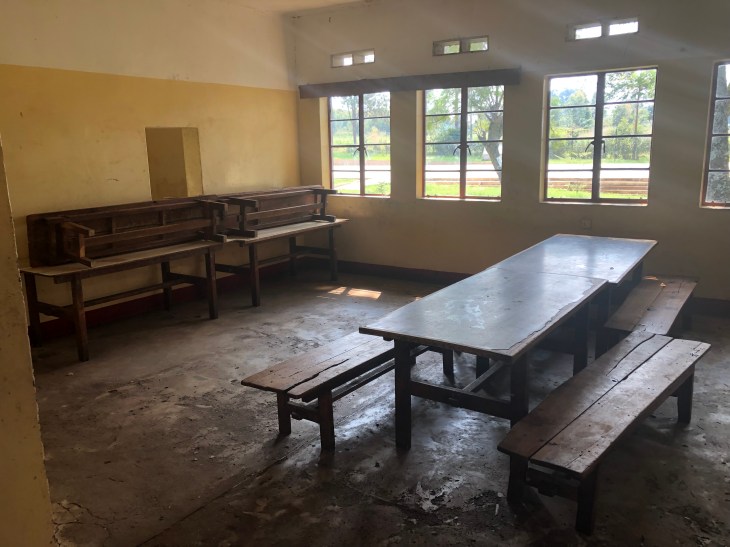
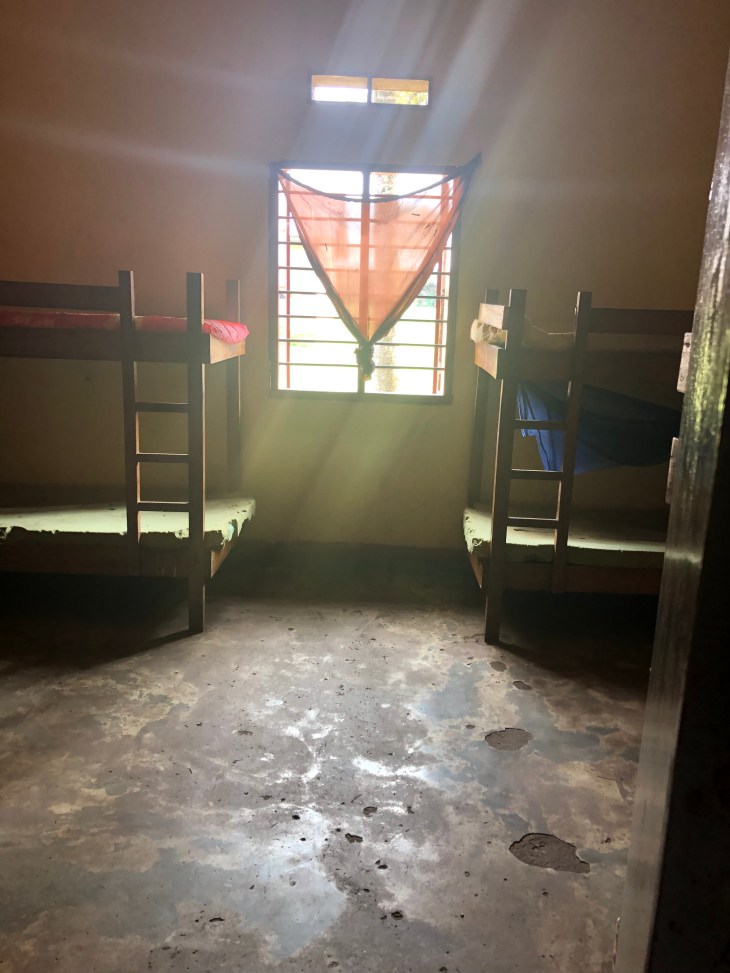
The school serves 112 students who are deaf or deaf-blind, emphasizing general education and teaching life skills the students could eventually use to make a living. Each year, the school accepts 10-12 new students from a pool of 25-30 applicants. Being the only school of its kind in the region, it is highly sought after and still can only accommodate a third to almost half of the need.
The headmaster explained his difficulty in finding qualified teachers, and keeping the ones he has from getting burned out too quickly. It’s a slow pace of teaching; students at this school take 10 years to complete what hearing and seeing students complete in 7 years.
For the deaf and blind students, their education is based almost solely on life skills — they learn to keep goats and cows, grow banana trees, and do basic farming so they can eventually both earn money and feed themselves.
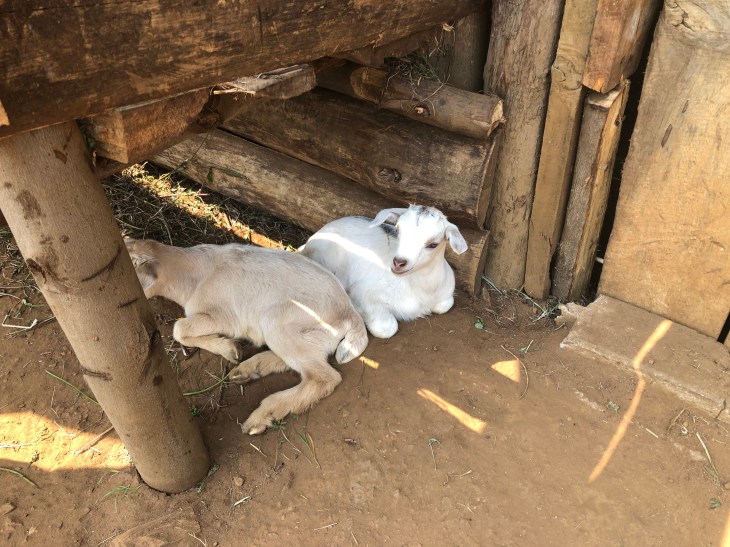
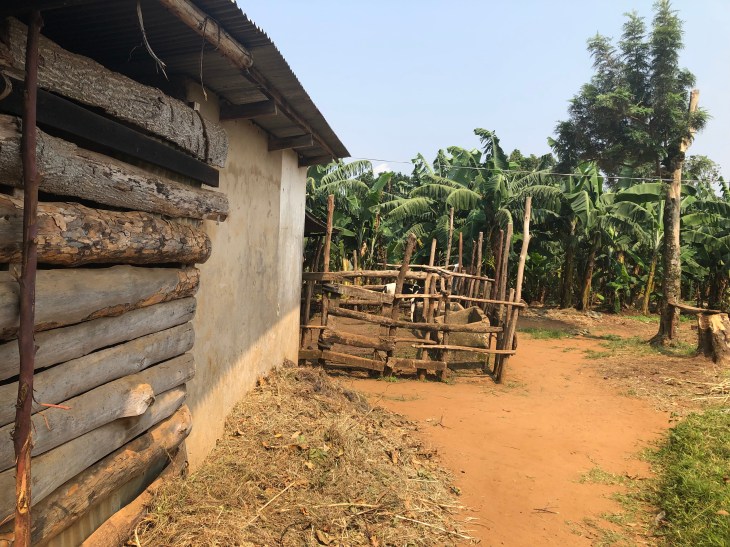
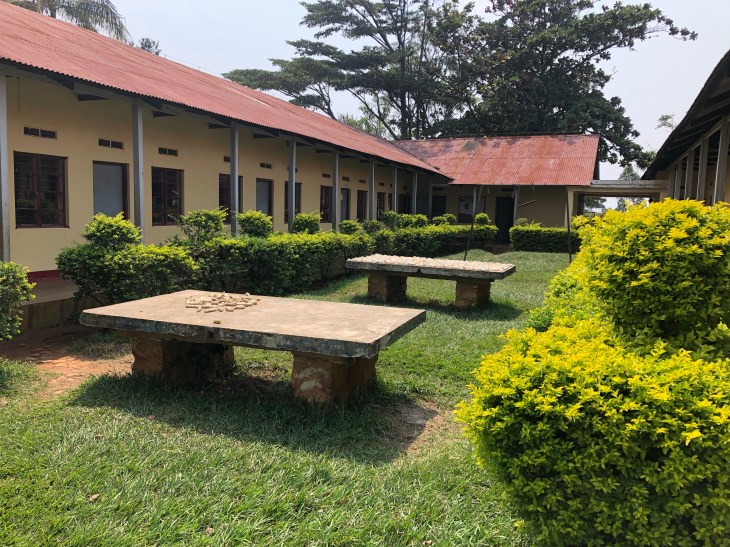
The headmaster explained the mode of instruction is mostly “tactile teaching”, meaning the teachers are physically holding or touching the students and showing them by feel how to complete certain tasks.
Just think about that for a minute.
Both as a teacher and as a student — I can’t even imagine where to begin. Throughout our tour, I was struck but what an incredible service this school provides–what a gift for those who are able to attend, but also what a overwhelming disappointment for those who apply and don’t get in.
I only wished we could have witnessed some of the teaching in action.
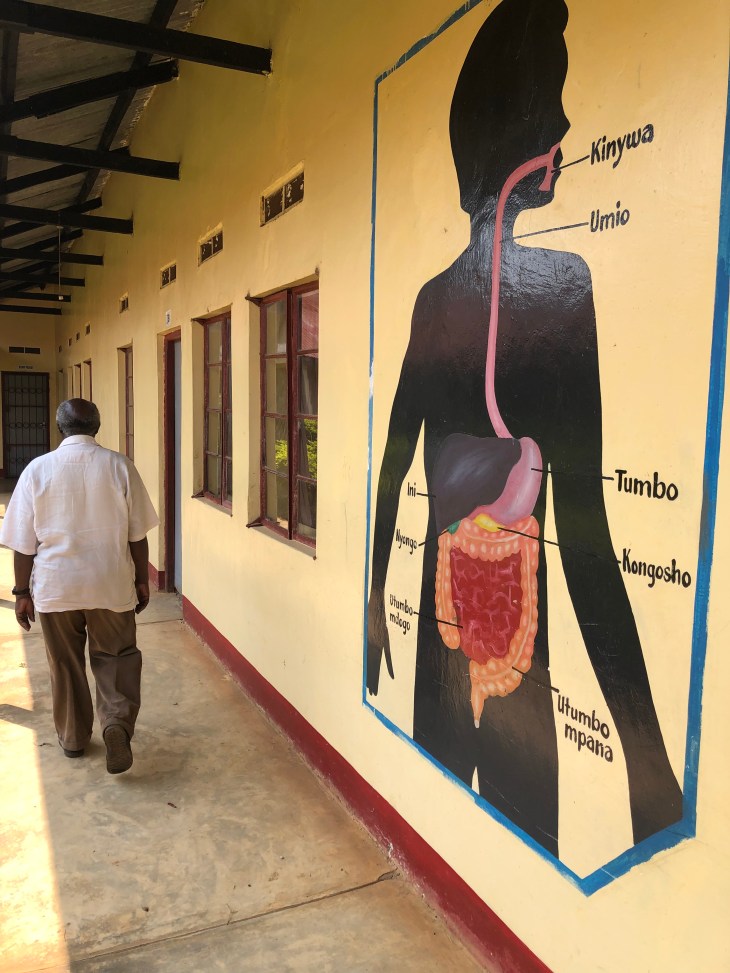
We did have the chance to visit a classroom of about 8 students who were staying at school over the holiday break to study for their final exams. As soon as we walked into the class, all the students stood up and placed their hands on their head, a sign of respect and attention. The headmaster signed for them to be seated, and he made an introduction in Tanzanian/Swahili (?) Sign Language (which is different, we learned, from American Sign Language, though it shares many common signs). The headmaster asked me to write my name to be introduced to the students, so I scrawled in big capital letters L-I-N-D-S-A-Y on the chalk board in front of them.
One of the students looked at me and then back at the headmaster–apparently asking a question. She laced her fingers together and held them in front of her chest, palms facing in, the way you would hold you hands right before you flip them out to crack your knuckles. Fingers intertwined, she moved her hands around in a circular motion, like you would stir a pot, and looked back at me.
The headmaster nodded and repeated the motion back to her to confirm, and she continued to do it back while staring at me, as if in disbelief.
I turned to the headmaster for translation. What had she signed?
“America.”
….
3. The Orphanage
As our RAV4 took us bucking over an impressive network of divets later that afternoon–the aftermath of rainy season on dirt roads–I tried to remember if I’d ever been to an orphanage before. Memories of volunteering at various orphanages during my study abroad trip to Lesotho came not flooding, but rather slowly trickling back…. I can’t say that I hold any distinctive memory, only a vague sense of having been to an orphanage, but perhaps only for older children.
This orphanage, though. This will be burned in my memory for quite some time.
Undoubtedly.
It’s a establishment run by nuns, and they take infants and toddlers, from newborns up to 2 year olds. One of the sisters explained to me that most of the babies they receive are brought either because their mother died during or soon after childbirth, or the baby may have been abandoned in the bush. Mostly family members will bring the babies in so that they can be fed formula during their infant stage, and then ultimately will be reunited with their living family members.
Families are asked to make a contribution of 8,000 shillings a month (roughly 3-4 USD) to assist with the cost of formula and general care of the child; they are also asked to visit their littles ones to maintain (or rather establish) a relationship in preparation for when the children are reunited with their family members. Unfortunately, many family members will make payments and visits for the first few months, but as time goes on the financial contributions dwindle down to nothing and subsequently the family members stop visiting, ashamed of not paying.
Our tourguide sister walked us through the nursery, starting first with the newborns, 0-3 months. She lovingly put her hand on each child’s head, telling us their name and a one-or-two sentence synopsis of how they came to be here.
“This one is Hope. Mother died at birth. We know the father; we are in touch.”
“This is Samuel. His mother asked another woman to hold him while she went to buy something in the market. Several hours later, the other woman realized the mother was never coming back. She called the police and they brought him here.”
“Little Eva. Found in the bush. Members of the community brought her here.”
She further explained some of the babies come with names, but others have no names, or names that would be painful to carry through life–Swahili for “abandoned in the bush”, for example. In the latter case, she smiled, “Instead, we give them new names–names of hope.”
There were two cribs in each room, all with glass windows connecting into the next room, so you could see the whole row of infant rooms at once from a single standpoint.
All of the babies we saw were awake, but eerily silent. They were tucked under a heavy covering of blankets, presumably to keep from squirming or moving around too much. Their eyes open.
The first baby we went to see didn’t cry or coo or smile… he was practically expressionless, but almost as soon as we entered the room he instinctively lifted his arms out and kept them raised, a silent request.
“I think he wants to be held.”
As we continued through the rooms, that was the single most heart-wrenching, simple truth for every child we saw:
I think they just want to be held.
The next room we toured was for infants around 6 months. We opened the door to a colorful classroom and 8 babies sitting on the floor, staring up at us in silence, unattended–no other adults in the room to be found. To be fair, I’m not sure how long the babies were in there by themselves; I assume only a few minutes with the way the sisters were buzzing in between rooms.
Still. It was a bit of a jarring scene to walk into. And not know how long they’d been left there.
One little one actually crawled up to us and started crying until the sister picked him up, but the rest of them remained plopped on the floor, just sitting and staring at each other, at us. A couple of them were rocking back and forth from the torso up.
When I asked about the children rocking, the sister summed up, “It’s not normal, for sure. We don’t know what it is.” She smiled a pained smile, “Maybe they are feeling lonely.”
The final room we toured was for toddlers, between 1 and 2 years old, varying stages of walking. It was clear none of them had diapers on, and several were walking around in little shorts that revealed they had wet themselves but were continuing to play. These were the children who would soon be reunited with their living family members.
Sometimes, the sisters explained, the transition can be hard.
“If the family never visits, we bring the children to them, but they don’t want to stay. They don’t know their family. They don’t understand.”
There were even more children who seemed to be rocking back and forth in this oldest group, as if it were catching, the older the children got.
At the end of our tour, the sister turned to us and asked,
“Any questions?”
How do you do it? How can I help? What do you need? How can we make this better? What’s going to happen to these children? What longterm effects will they suffer from this separation? Why does this have to be a reality in our world? Where are all the children who didn’t make it to your facility? How often do they get to be held? Will they only cry more if I try to hold them? Why aren’t they crying? Is it better to just let them be? Is that even human? How can we help them to stop rocking?
I was too welled up with tears to ask any of it. I just shook my head and nodded in thanks. And we left.
Johanssen could tell by my silence on the drive home, I was deeply disturbed by what we’d just seen. After looking over at me in the passenger seat a couple times, he piped up, “The other side of this is–if they didn’t have this place, these babies wouldn’t have life! There is hope now!”
I nodded in sad agreement. Certainly, the sisters running this organization provide an amazing service. It’s clear they have very limited resources, and they are absolutely doing the best they can with what they have–there is so much to be grateful for, so much to admire in the love they have for these little ones.
I don’t have a perfect, uplifting wrap up for this.
I still don’t know what to do with it.
It was just really hard to see.
….
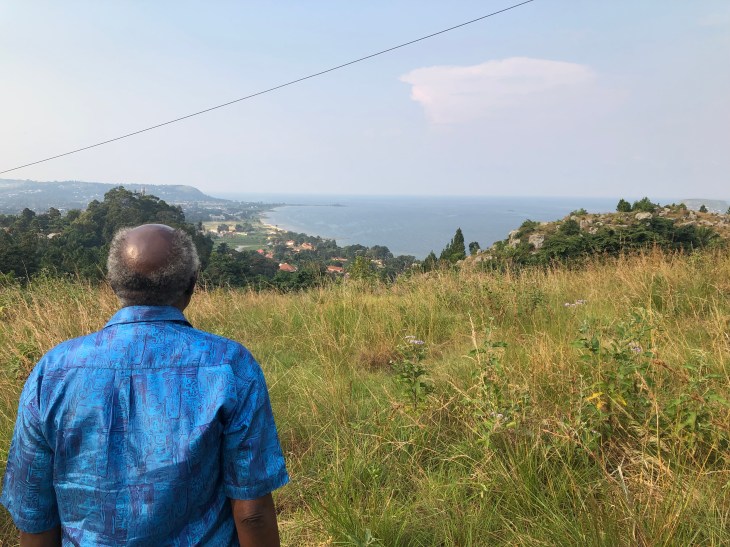
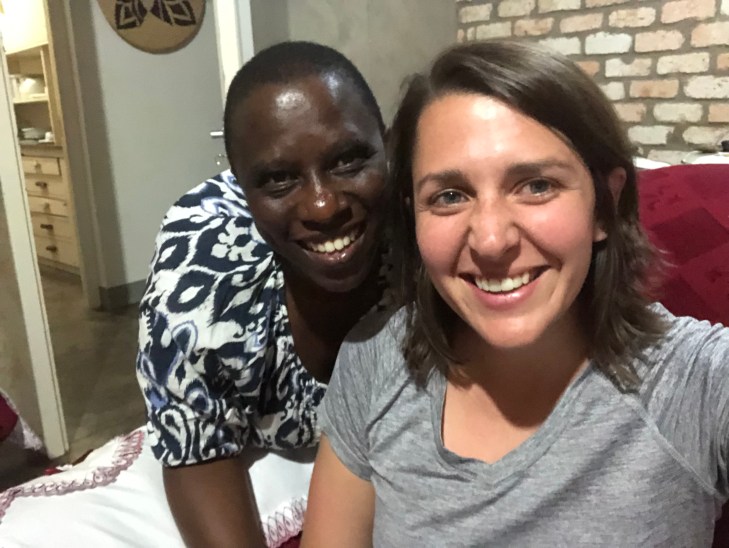
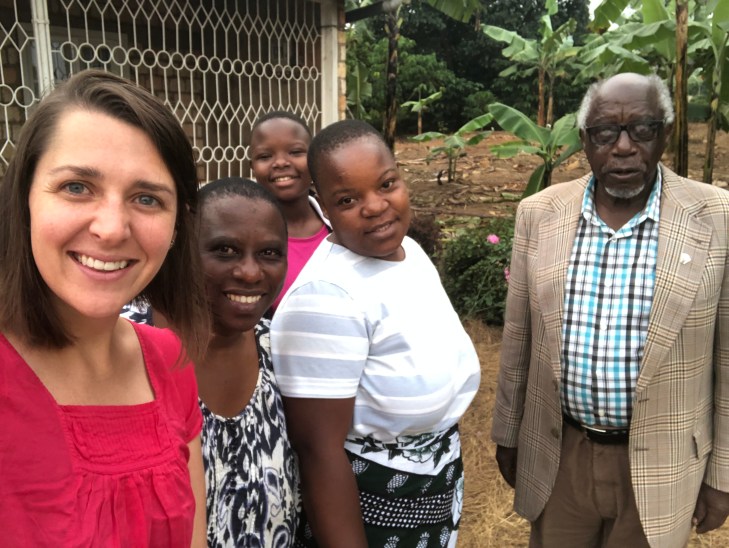
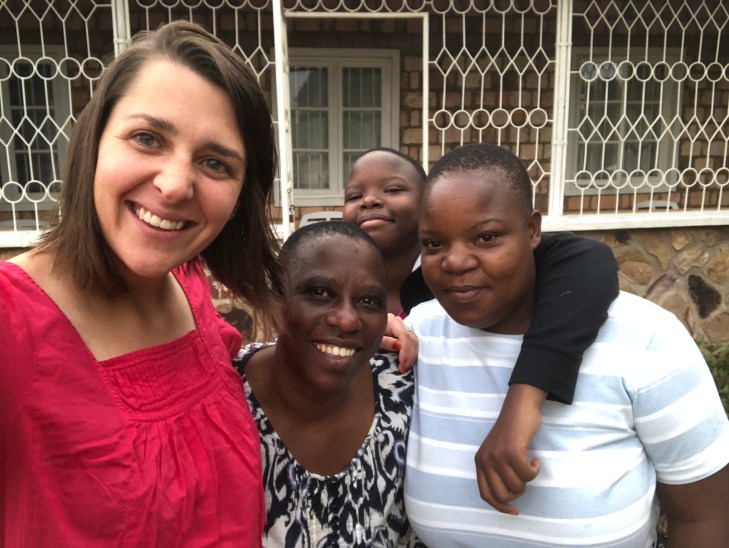
This last leg of my trip to Tanzania was filled with difficult, but important learning. I feel so grateful to Johanssen for showing me these things–it completed my time in Tanzania in ways I hadn’t anticipated and didn’t know I needed. I left filled with admiration and gratitude for this family who hosted me so lovingly, but more importantly, who cares for and invests in their community so fiercely.
—
I’ve been back in the States now for almost a month. Whenever someone asks me about my time in Tanzania, the first thing I say is always:
“I know I will not always have the freedom to so easily up and leave all my responsibilities and my life for 3 weeks. I knew these friends, I wanted to take this trip. I’m just so glad I took the time to do it now.”
That’s it my friends.
Maintain those friendships. Make those plans. Book those plane tickets.
Adventure on!
Thanks for reading ❤️
-L

 Tanzania Travels